Sleep, materials & comfort
What to Check Before Choosing an Organic Dunlop Latex Mattress
An organic Dunlop latex mattress can look like a simple, natural choice. The details beneath the cover, however, shape how it feels, how it fits your bed, and how well it suits your everyday routines. Before settling on one, take a closer look at firmness, layer design, certifications, care instructions and the frame that will support it.
Mattress shopping is often presented as a matter of choosing a label: plush or firm, foam or spring, natural or conventional. But a mattress is a system, and the small print matters. In the case of an organic Dunlop latex mattress, that system may include more than one latex layer, a cotton cover, wool quilting, and specific instructions about ventilation, rotation and cleaning. Two mattresses described with similar words can feel quite different once you lie down on them.
A measured approach helps separate material claims from meaningful comfort details. Start by asking what each layer does, how the firmness is described, what the certifications actually cover and whether your bed frame is compatible. Then consider how you sleep, what you already know about your comfort preferences, and what maintenance you are realistically willing to do. The aim is not to find a universally perfect mattress; it is to understand the design well enough to decide whether it works for you.
Understand what “Dunlop latex” describes
Dunlop refers to a method of making latex foam. In broad terms, latex is processed into a foam material, then formed into a core or layer used in a mattress. Dunlop latex is often associated with a relatively substantial, buoyant feel, though the experience depends on the particular formulation, density, firmness and construction. The word alone does not tell you whether a mattress will feel soft, medium or firm.
It is also important to distinguish the manufacturing method from the source and certification of the material. “Dunlop” describes a process; “organic” describes a sourcing or production claim that should be supported by relevant documentation. A product may contain latex made using the Dunlop process without every part of the finished mattress being organic. The cover, thread, quilting, adhesives, fire barrier and other components may have different material descriptions and standards.
Read the full specifications rather than relying on a headline phrase. Look for a component-by-component account: the latex type and source, the materials surrounding it, whether the cover is removable, and which independent certifications apply to which components. If the listing uses a broad phrase such as “all natural,” ask what it means in the context of that specific mattress. Clear material descriptions are more useful than an impressive-sounding label without detail.
Compare firmness with construction, not just a number
Firmness is one of the most personal parts of mattress selection, and there is no single scale used consistently by every manufacturer. A “medium” feel from one company may not match a medium from another. Firmness descriptions are best treated as a starting point, not a guarantee. If a manufacturer provides a scale, read its explanation and check whether it refers to the overall mattress or to a particular layer.
Construction can change how firmness is experienced. A mattress with a supportive lower layer and a softer upper layer may feel different from a single, uniformly firm latex core. A quilted wool or cotton surface can also alter the first impression, while the underlying latex influences deeper support and resilience. Thickness, body weight, sleeping posture and the bed base can all affect how the same mattress feels in use.
Think about the sensation you want rather than relying only on a firmness word. Do you prefer a surface that cushions your shoulders and hips, or one that feels more level and supportive? Do you like the springy response often associated with latex, or would you rather feel more enveloped by the mattress? These questions help translate a broad product description into a more useful personal comparison.
When possible, test a mattress in person and spend enough time in your usual sleep position to notice pressure and alignment. If testing is not practical, investigate the trial period and return conditions before purchasing. Confirm how long you have to evaluate the mattress, whether collection or return fees apply, and whether the trial begins on delivery or after a stated break-in period. These are practical parts of the decision, not afterthoughts.
Match the sleep surface to your position and preferences
Sleep position can offer a helpful framework, although it cannot predict comfort perfectly. Side sleepers often pay close attention to how the surface accommodates the shoulder and hip. Back sleepers may focus on a balanced feel that supports the body without seeming overly rigid. Stomach sleepers commonly prefer a surface that does not feel excessively soft beneath the midsection. These are general considerations, not rules: comfort, body shape, health needs and personal preference differ widely.
Consider whether you share the bed, too. A partner may prefer a different firmness or respond differently to movement. Latex has an elastic, responsive character, but motion transfer and edge support depend on the mattress design as a whole. If those qualities matter to you, seek specific construction details or test the bed with your partner rather than assuming that the material name settles the question.
Pillows and bedding are part of the overall arrangement. A pillow with too much or too little loft can make a mattress seem less comfortable, particularly when you change sleep positions. A mattress protector may add a subtle layer to the surface, so check that its fabric and fit are appropriate for the bed. A thoughtful sleep setup is less about one headline feature than about how its pieces work together.
Look closely at thickness and layer design
Mattress thickness is easy to compare, but it should not be mistaken for a comfort rating. A taller mattress is not automatically more supportive or durable. Instead, look at the number of layers, their individual thicknesses, and the role each is intended to play. A multi-layer design may combine a firmer support core with a more yielding comfort layer. A single-core mattress may offer a more consistent feel from surface to base, depending on its cover and finishing materials.
Ask whether the latex layers are separate or joined, whether they can be rearranged, and whether the mattress can be flipped or only rotated. A reversible design with different firmness on each side offers a practical way to adjust feel, but only if the manufacturer’s instructions explain how to use it. Many mattresses are designed to be one-sided. Turning one over when it is not made for that purpose can place the intended support system upside down.
Layer specifications also help you judge what you are actually buying. If a listing describes an eight-inch mattress, for example, check whether that measurement includes the cover and quilting. Look for the thickness of each latex layer rather than assuming that all eight inches are latex. The more precise the description, the easier it is to compare two products honestly.
As one example of a clearly described layered design, the Naturally Organic Hudson Latex Mattress is described as eight inches thick, with a five-inch firm organic Dunlop latex core and a three-inch medium organic Dunlop latex layer. Its layers are wrapped, with a cotton and wool quilted cover. That information gives a shopper specific construction details to consider; it does not mean that the mattress will feel the same to every sleeper.
Read certifications with care
Certifications can help clarify how materials are assessed, but they are not interchangeable and should not be treated as a single, all-purpose endorsement. Some certifications relate to the organic status of a material; others address processing or product-related criteria. A certification for one component does not automatically establish that every part of a finished mattress carries the same certification.
For latex, shoppers may encounter GOLS, while textiles and certain other materials may be described with GOTS certification. The scope of a claim matters: check whether a certification refers to the latex itself, the cotton cover, the wool, or the finished product. Ask the maker for current certification details if the listing is unclear, and look for the certificate holder or product scope rather than relying solely on a logo.
Certifications also do not answer every comfort or performance question. They cannot tell you whether the mattress suits your sleeping position, whether its firmness feels right, or whether the cover is easy to clean. They are one useful part of due diligence alongside transparent material descriptions, a clear warranty, detailed care guidance and a realistic opportunity to evaluate the mattress.
Be attentive to claims that go beyond what a certification establishes. Words such as “chemical-free” can be imprecise: all physical materials consist of chemicals, and such phrasing does not replace a specific account of what is present or absent. Prefer verifiable descriptions, such as named materials and documented standards. A calm, exact explanation is more helpful than broad promises about health or performance.
Check the cover, quilting and fire-safety construction
The cover is the first layer you touch, but it is also part of the mattress’s construction. Find out whether it is removable, whether it is washable, and what cleaning method is recommended. “Removable” does not necessarily mean machine washable. Some covers are intended for spot cleaning only, and removing them may require care to avoid shifting or damaging internal layers.
Natural materials such as wool and cotton are sometimes used in quilting or as part of a fire barrier. Their presence, type and placement can influence the surface feel and maintenance requirements. Ask how the mattress meets applicable fire-safety requirements and which materials are used in that construction. Avoid assuming that any single material description explains the complete fire-safety design; consult the manufacturer’s product documentation for the specific model.
If you have material sensitivities or concerns about a particular component, seek specific information from the manufacturer and consult a qualified health professional as appropriate. A general “organic” label cannot determine whether a product is suitable for every individual. The goal is to understand the actual materials and make an informed decision for your circumstances.
Confirm that your bed frame can support it
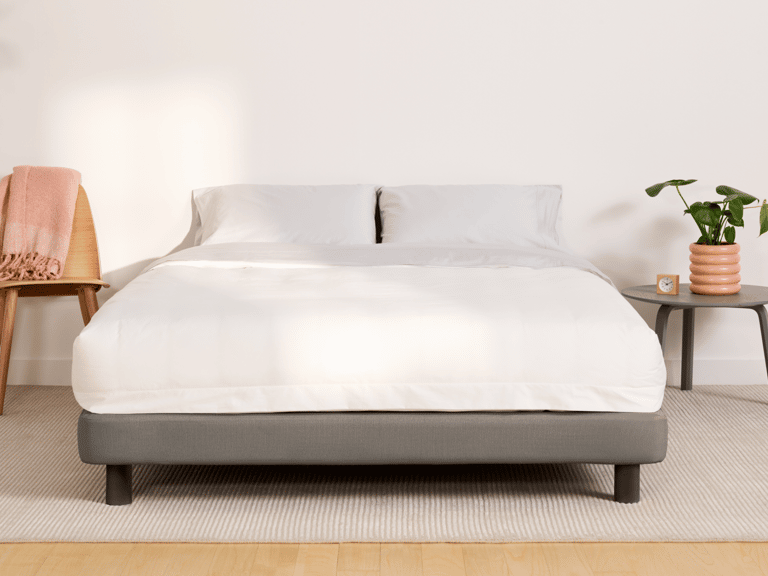
A well-made mattress still needs an appropriate foundation. Before ordering, check the manufacturer’s requirements for slats, platform bases, foundations or adjustable bases. Pay attention to slat spacing, center support and maximum weight guidance, if provided. An unsuitable or uneven base can affect the mattress’s stability and may compromise warranty coverage.
Measure the bed frame and the room, not just the mattress you currently own. Confirm the exact mattress size and height, including any topper or protector you expect to use. A thicker mattress can change how high the bed sits and how easily you get in and out. Also consider headboard proportions, fitted-sheet depth and clearance around bedside tables.
Ventilation is another practical point. Some mattress designs require a slatted base or another support arrangement that allows airflow. Follow the maker’s guidance rather than placing the mattress directly on the floor or on a solid surface by default. A suitable frame helps the mattress perform as intended and can make routine cleaning and airing more manageable.
Make care part of the buying decision
Natural latex mattresses are not maintenance-free. Care needs vary by construction, so the maker’s instructions should take precedence over general advice. Some mattresses should be rotated periodically; others may be designed to remain in one orientation. A mattress that can be flipped is not necessarily one that must be flipped frequently. Check the exact schedule and whether the instruction applies to the mattress, a topper or both.
Many latex mattress covers should not be machine washed, even when they can be removed. Some are spot-clean only, and the latex itself should generally be protected from excessive moisture and direct sunlight. Do not assume that a removable cover can be treated like ordinary bedding. Read the care label before attempting cleaning, and use only the methods recommended for that product.
A well-fitting mattress protector can help guard against everyday spills and soiling. Check that it is compatible with the mattress depth and does not introduce a surface feel you dislike. If washability matters to you, compare the protector’s care instructions as carefully as the mattress’s. A few minutes spent on these details can prevent unpleasant surprises later.
Assess delivery, warranty and the practical fine print
Latex mattresses can be substantial, and a larger or all-latex model may be difficult to move without help. Ask how it will be delivered, whether setup is included, and whether the delivery team can carry it upstairs. If you live in a building with narrow hallways, tight turns or limited lift access, measure the route before ordering. A mattress’s stated dimensions do not capture the handling space its packaging may require.
Read the warranty in full. Note its duration, what defects are covered, whether coverage is limited, and what could invalidate it. The requirements may include using an approved foundation, keeping purchase records or following specified care instructions. A long warranty is not a promise that comfort will remain unchanged indefinitely, so distinguish structural coverage from satisfaction or trial policies.
Confirm the return and exchange terms separately from the warranty. Look for the evaluation period, any return fees, required packaging and exclusions. Ask whether pickup is available and how the mattress should be prepared. These details are especially important when you cannot test the mattress in a showroom.
A considered checklist before you decide
Before committing, use this concise checklist to bring the most important details into focus:
- Materials: Are the latex, cover, quilting and other components described clearly?
- Certifications: Which specific materials or parts of the finished mattress are covered?
- Firmness: Is the rating explained, and does the feel seem compatible with your preferences?
- Layers: What is the thickness and purpose of each layer, and is the mattress reversible?
- Fit: Does the mattress size and height work with your frame, bedding and room?
- Support: Does your foundation meet the required slat, center-support and ventilation guidance?
- Care: Are the cleaning, rotation and handling instructions realistic for your routine?
- Policies: Do you understand delivery, trial, return and warranty terms?
Choose with clarity, not with a label alone
An organic Dunlop latex mattress can be a compelling option for people drawn to resilient materials and detailed, transparent construction. But the most useful choice is not defined by the word “organic” in isolation. It emerges from the relationship between firmness, layers, cover materials, certification scope, foundation compatibility and care requirements.
Take time to compare like with like. Look beyond a single firmness score to the actual layer design; look beyond a certification mark to the component it covers; and look beyond the product description to the delivery and return policies that shape the purchase. The result is a more grounded decision, one that respects both the intricacy of the materials and the very personal nature of sleep comfort.
A mattress should suit the way you live as well as the way you rest. When its construction is clearly explained, its support fits your preferences and its practical requirements make sense in your bedroom, the choice becomes less about chasing an idealized promise and more about finding a thoughtful fit.